

Electricity remains key to Zambia’s economic development as it is an essential input to various economic sectors such mining, agriculture, commercial, manufacturing, social services and households.
The key players in the Zambian electricity supply industry include:
- ZESCO, the naBonal public uBlity which is verBcally integrated and is responsible for generaBon, transmission, distribuBon and supply of electricity.
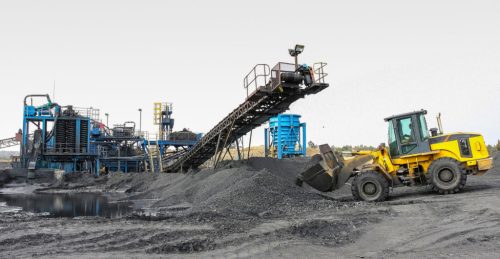
- Independent power producers (IPP’s) such as Lunsemfwa Hydro Power, Maamba Coal (thermal), Ndola Energy (heavy fuel oil), Itezhi tezhi (hydro), Kariba North Bank (hydro), CEC Renewable (solar), Chisamba (solar), and Bangweulu (solar)
- Copperbelt Energy CorporaBon (CEC) which serves the mines on the copperbelt and is involved in transmission as well as export of power to DRC.
- Northwestern Energy CorporaBon (NWEC) serves the mine townships in the northwestern part of the country namely Solwezi, Lumwana and Kalumbila.
- Power traders such as Greenco, Petrodex and Kanona Power.
The current installed capacity is 3,985MW with hydro accounting for more than 80%, coal thermal contributes 8% and solar contributing 5.5%. Zambian’s electricity supply industry has historically been dependent on hydropower, and the energy mix has in the last 10 years seen new power supply from thermal (coal), heavy fuel oil (HFO) and recently from solar. The shift to diversify power generation away from hydro has come about as a result of recent drought with reduced rainfall in 2022-3 seasons. The drought contributed to reduced generation thereby resulting in load restriction to all customers served by the national grid.
Load shedding impacted the economy negatively and forced the government to take decisive intervention through the introduction of the “open access” regime which saw the coming into the market of power traders to support ZESCO with additional imported power through the Southern Power Pool (SAPP). The introduction of the “open access” regime has allowed power traders to participate in the market openly and supply power to customers willing to buy the power through wheeling arrangements via ZESCO transmission and distribution infrastructure.
This has seen the complete eradication of the single buyer model where previously IPP’s would sell their power to ZESCO. The single buyer model was problematic because IPP’s would sell the power to ZESCO at a higher tariff than what ZESCO would sell the same power to its customers. The introduction of power traders has equally forced the market to react to new tariffs over and above the regulated tariffs. The power traders have been able to negotiate market driven tariffs reflecting the supply and demand obtaining in the market. The “open access” regime has gone a long way to increase the importation of electricity necessary to cover the shortfall to mitigate the load shedding which became a political talking point.
While load shedding created a challenge for the end users, it has opened up opportunities for new generation especially several solar projects as well as additional coal projects which are expected to be implemented. Market certainty remains a major challenge especially that the new projects will require a guaranteed economic tariff to underwrite bankability of the projects. The risks associated with bankability will have to be overcome for the new projects to see the light of day. Whereas the power trading is seen to help in the short term, the long-term market. Sustainability will only be assured with an economic built supported by overall macroeconomic stability which government will have to assure.
Furthermore it is expected that in the medium term with all new generation projects coming on stream, there will be need to invest in additional transmission capacity as well as new interconnectors to sustain the increase in power trading. There is therefore an urgent need to plan for new transmission capacity to match the expected increase in generation. It is expected that a well measured energy mix supported by adequate transmission capacity will remain critical to a sustainable electricity supply industry.