

Taisei Corporation continues to drive innovation in tunnel construction through its work on the Shinnozoki Tunnel, a major infrastructure project extending 1.148 kilometres along the border between Yamagata and Akita prefectures. Backed by more than 150 years of experience, the company has established a strong reputation across civil engineering, energy, and environmental sectors, consistently adopting new technologies to improve efficiency, safety, and quality.
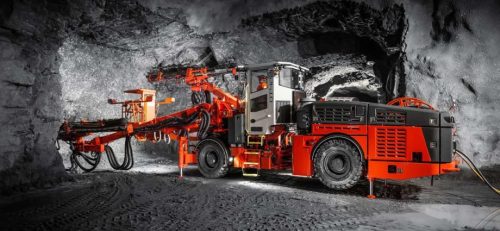
As part of its modernization strategy, Taisei has integrated advanced mechanisation and automation into its tunnelling operations. A key example is the deployment of the Sandvik DT1131i, a fully automated three-boom jumbo introduced in 2020. This machine represents the industry’s shift toward remote-controlled, digitally enhanced equipment.
The Shinnozoki Tunnel served as an ideal testing environment for this technology. With a cross-section exceeding 100 square metres, the large mountain tunnel posed significant technical challenges that required high levels of precision and efficiency. Built on Sandvik’s i-series platform, the DT1131i is designed for demanding conditions, offering accurate drilling, extended reach, and intelligent control systems that optimise drilling patterns while minimising overbreak and improving overall tunnel quality.
Initially, Taisei used the automated jumbo for both blasting and rock-bolting, a common approach in Japan. However, this limited the machine’s full capabilities. By dedicating the DT1131i exclusively to drilling blast holes, the team was able to unlock its full potential and achieve noticeably better performance.
The transition to automation required extensive technical support and operator training. Sandvik engineers worked closely with Taisei’s team, providing practical guidance to ensure smooth implementation. This collaboration was critical, as the system differed significantly from conventional tunnelling equipment typically used in Japan.
Tunnelling in Japan presents unique challenges, including complex rock conditions and the need for closely spaced steel arches. The DT1131i incorporates specialised features to address these demands, allowing it to operate efficiently in environments that require both precision and adaptability. This has made it especially valuable on projects like Shinnozoki.
Automation has delivered clear gains in productivity and consistency. The system enables a single operator to manage drilling tasks, reducing labour requirements while maintaining high performance. It has also improved the accuracy of contour hole drilling—previously a difficult task for automated systems.
The use of advanced components, such as spike-type centralisers, has enhanced drilling stability and reduced equipment wear. As a result, consumption of rods and drill bits has decreased, and downtime has been significantly reduced compared to traditional methods.
Operators have also noted practical benefits. The top-mounted boom design improves visibility, while the automated system reduces strain on hydraulic components, increasing durability and reliability in daily operations.
Most importantly, automation has introduced a new level of consistency. The DT1131i delivers uniform results regardless of the operator, ensuring stable performance even when workforce availability varies. This reliability has strengthened overall efficiency and reduced operational risk.
Looking ahead, Taisei sees further opportunities in automation, including the potential for fully unmanned tunnelling. By continuing to invest in advanced technologies, the company aims to push the boundaries of tunnel construction and raise industry standards across Japan.
The Shinnozoki Tunnel project ultimately highlights how intelligent drilling solutions can transform complex infrastructure projects—improving efficiency, precision, and consistency while enhancing resilience in modern construction.