

From autonomous and robotic rigs and AI-powered targeting to low-impact drilling and real
time data analytics, technology is reshaping the mining sector – fast-tracking the discovery
of new projects across the globe, and in Africa.
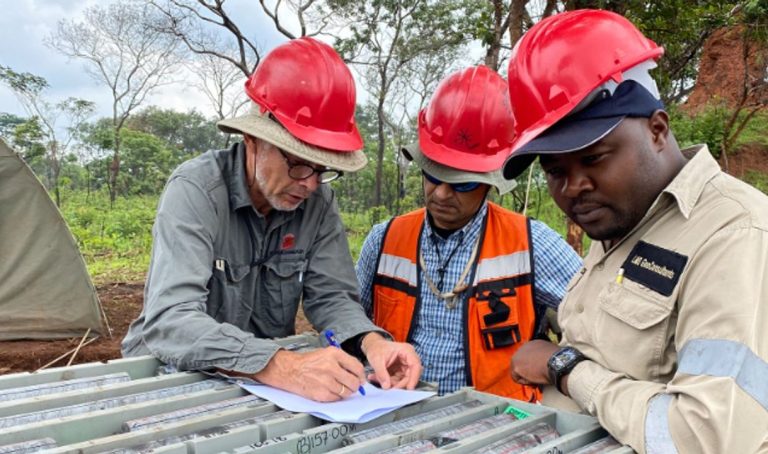
An audience at Investing in African Mining Indaba 2026 heard how cutting-edge technologies
are transforming exploration drilling into a high-precision, data-rich process.
Data-powered drilling
The mining industry is undergoing a significant transformation, as drilling evolves from a
purely physical process to a sophisticated, data-powered discipline. A session at this year’s
Mining Indaba highlighted the critical shift towards confirmation-focused drilling, where
integrated AI adds significant operational efficiency.
Experts emphasised that while this promises to de-risk investment decisions, it also brings
an urgent need to upskill the mining workforce for a data-centric future. The overarching
trend is a towards higher precision, reduced uncertainty and accelerated discovery – all
powered by technological advancements.
Hexagon mining division president Dave Goddard said that current drilling practices are
increasingly focused on validation rather than just discovery, with technology providing the
essential data to support hugely important investment decisions.
“Today, advanced analytics confirms geological models and assesses economic viability,”
said Goddard. “Technology needs to provide enough information to the person making
funding decisions that they feel confident there will be a return on investment. Confidence
comes from the data.”
Experts also noted that industry has moved decisively from speculative, “blanket drilling” to
highly targeted approaches, driven by inversion modelling and AI predictions that aim for
precise geological targets.
While operator assistance remains key in current setups, there’s a growing push to automate
manual processes and enable remote operations, drawing significant lessons from the oil
and gas sector.
Prof. Glen Nwaila, Director of the African Research Centre for Ore Systems Science
(CORES) at the University of The Witwatersrand drew parallels between current AI
deployment in exploration and the aviation industry, where pilots became supervisors rather
than just operators.
“A key challenge in hard-rock mining remains the time lag in obtaining Measure While
Drilling (MWD) data,” he said. “That’s why we need more immediate feedback loops for
effective decision-making. We drill to reduce uncertainty, to gain confidence.”
Accelerating the timeline to discovery remains the main goal for exploration, particularly
when it comes to meeting the critical-mineral requirements of the global energy transition.
Kendall Cole-Rae, expert in residence at Fleet Space Technologies, pointed out that Tier 1
mining companies were now actively integrating non-traditional experts like data architects
and analysts into their teams, merging deep traditional drilling expertise with cutting-edge
technologists.
“Reducing the timeline to discovery is key with energy transition requirements,” he said. “We
must increase the probability of success.”
Rosond CEO Glen McGavigan predicted that the future driller would evolve into a maintainer
and QC officer over the data, moving away from purely manual operation to a more holistic,
data-informed role.
He drew parallels with Google Maps, saying that future drilling rigs would use machine
learning to detect geological changes and recommend optimal parameters to operators,
while ensuring safety and productivity at the same time.
Prof. Nwaila said the future would require significant reforms in education and training,
advocating for formalised programmes with industry leaders and continuous learning
modules for professionals. He said a critical new discipline will be the “geo-data scientist”.
“We need a bridge between operator, the mine, geologists and the mine manager who must
use the data.”
The discussions underscored a consensus that the future of mining hinges on cross
disciplinary cooperation.
From the integration of data scientists and AI specialists into geological teams, to the sharing
of data for collective benefit, the way forward is unmistakably one of partnerships – with
every stakeholder contributing to a more precise and sustainable mining landscape.
- Investing In African Mining Indaba runs until February 12 at the CTICC in Cape Town.