

Glencore is intensifying its strategic focus on the Democratic Republic of the Congo (DRC) as it advances plans to become one of the world’s leading copper producers through organic growth rather than large-scale mergers.
The move follows the company’s decision to end merger discussions with Rio Tinto, which could have resulted in the creation of the world’s largest mining group. Instead, Glencore is prioritising balance sheet strength and portfolio optimisation, with a clear emphasis on high-demand energy transition metals such as copper and cobalt.
DRC Assets Central to Growth Strategy
A key element of this strategy is the restructuring of ownership in its flagship DRC operations. Glencore recently agreed to sell a 40% stake in selected assets to the Orion Critical Minerals Consortium, a move designed to unlock capital while retaining operational control of strategically important resources.
Production growth is expected to be driven primarily by enhancements at existing operations, particularly the Kamoto Copper Company Complex (KCC). A land access agreement with state-owned miner Gécamines is set to support output expansion toward approximately 300,000 tonnes of copper annually, while also extending the life of the mine.
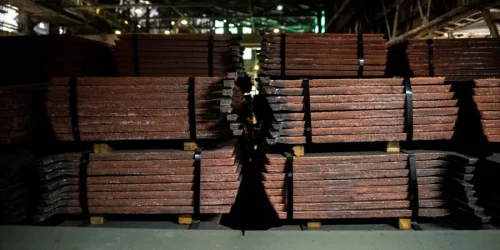
Glencore has reaffirmed its target to produce more than 1 million tonnes of copper per year by 2028, with further growth projected to reach around 1.6 million tonnes annually by 2035. These ambitions position the DRC as a cornerstone of the company’s long-term production profile and a critical contributor to global supply of energy transition minerals.
Operational Performance and Market Dynamics
In 2025, Glencore produced 851,600 tonnes of copper, representing an 11% year-on-year decline, largely due to lower ore grades and reduced recovery rates across several operations. However, performance improved in the second half of the year as operational efficiencies were strengthened.
Cobalt production in the DRC declined slightly, influenced by export controls and regulatory measures aimed at stabilising global markets. These developments highlight the increasing role of the Congolese government in managing strategic mineral supply and pricing.
Across Glencore’s broader portfolio, zinc output increased, while nickel production declined in response to softer market conditions. Despite these fluctuations, the company continues to prioritise copper and cobalt as its primary growth drivers.
Financial Resilience Amid Energy Transition
Glencore reported stronger revenues in its latest financial results, supported by robust commodity trading and sustained demand for industrial metals. However, profitability was impacted by weaker coal prices, reflecting the global shift toward lower-carbon energy sources.
While coal remains a significant contributor to cash flow, it presents growing strategic challenges amid intensifying environmental pressures and long-term decarbonisation trends. As a result, Glencore is progressively rebalancing its portfolio toward minerals essential for electrification, renewable energy, and battery manufacturing—sectors in which the DRC plays a pivotal role.
Outlook: DRC at the Core of Future Growth
Looking ahead, Glencore aims to maintain strong production levels while navigating regulatory, operational, and geopolitical risks associated with mining in resource-rich regions.
The company has not issued formal cobalt production guidance for 2026, citing uncertainty around export quotas and market controls in the DRC. Nonetheless, its long-term growth strategy remains firmly anchored in the country’s vast copper and cobalt reserves.
With global demand for critical minerals expected to accelerate, the DRC is set to remain a central hub in the energy transition—serving as a key pillar of Glencore’s expansion plans in the years ahead.