
SKF successfully delivered an advanced condition monitoring (COMO) solution for one of Tunisia’s leading food processing companies, enabling real-time visibility into the health of critical machinery and supporting a strategic transition from reactive maintenance practices to data-driven decision-making and predictive operations.
Growing pressure to maximise equipment availability, control costs and improve operational efficiency, is driving the need for maintenance decisions to be guided by accurate data and actionable insights. Unplanned equipment failures can significantly affect production, product quality and profitability, particularly in highly competitive food and beverage operations. Consequently, manufacturers can no longer afford to rely solely on reactive maintenance strategies and must look towards a more proactive approach to asset management to optimise business sustainability.
“The journey towards smarter maintenance begins with visibility,” says Marwen Chebbi, Sales Manager at SKF Tunisia. “SKF’s COMO solutions play a pivotal role in helping industries transform machine data into actionable intelligence, supporting the transition towards predictive maintenance strategies that enhance asset reliability, improve operational performance and deliver measurable business value.”
SKF has partnered with the Tunisian customer since the food processing company’s inception. Throughout this long-standing relationship, SKF has supplied bearings, maintenance tools, lubrication solutions and offline condition monitoring services, building a strong foundation of technical expertise and operational insight.
Chebbi explains that the project gained momentum towards the end of 2025, following initial discussions with the customer that arose from SKF’s COMO training programme in South Africa. To ensure a seamless implementation, the SKF team conducted a comprehensive site assessment at the customer’s facility in May 2026, evaluating connectivity requirements, cable routing and the optimal placement of monitoring points. With the customer relying solely on offline condition monitoring at the time, a key objective was to enhance its reliability programme through continuous machine health visibility. To achieve this, the SKF team set out to identify the hardware and software solution best suited to the customer’s process requirements with the ultimate objective to anticipate failures, optimise maintenance planning and safeguard production continuity.
“Drawing on our process knowledge, the expertise of our authorised distributor, Équipement Moderne, and close collaboration with the customer through multiple site visits, we worked together to identify the solution with reliability, local support and long-term customer value at the centre of every decision,” says Chebbi.
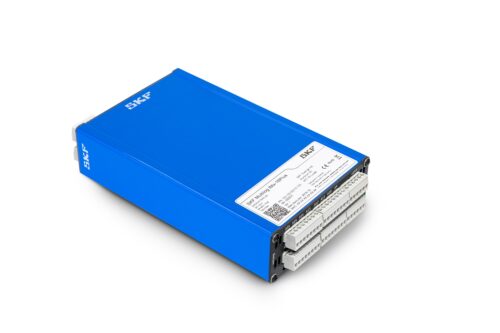
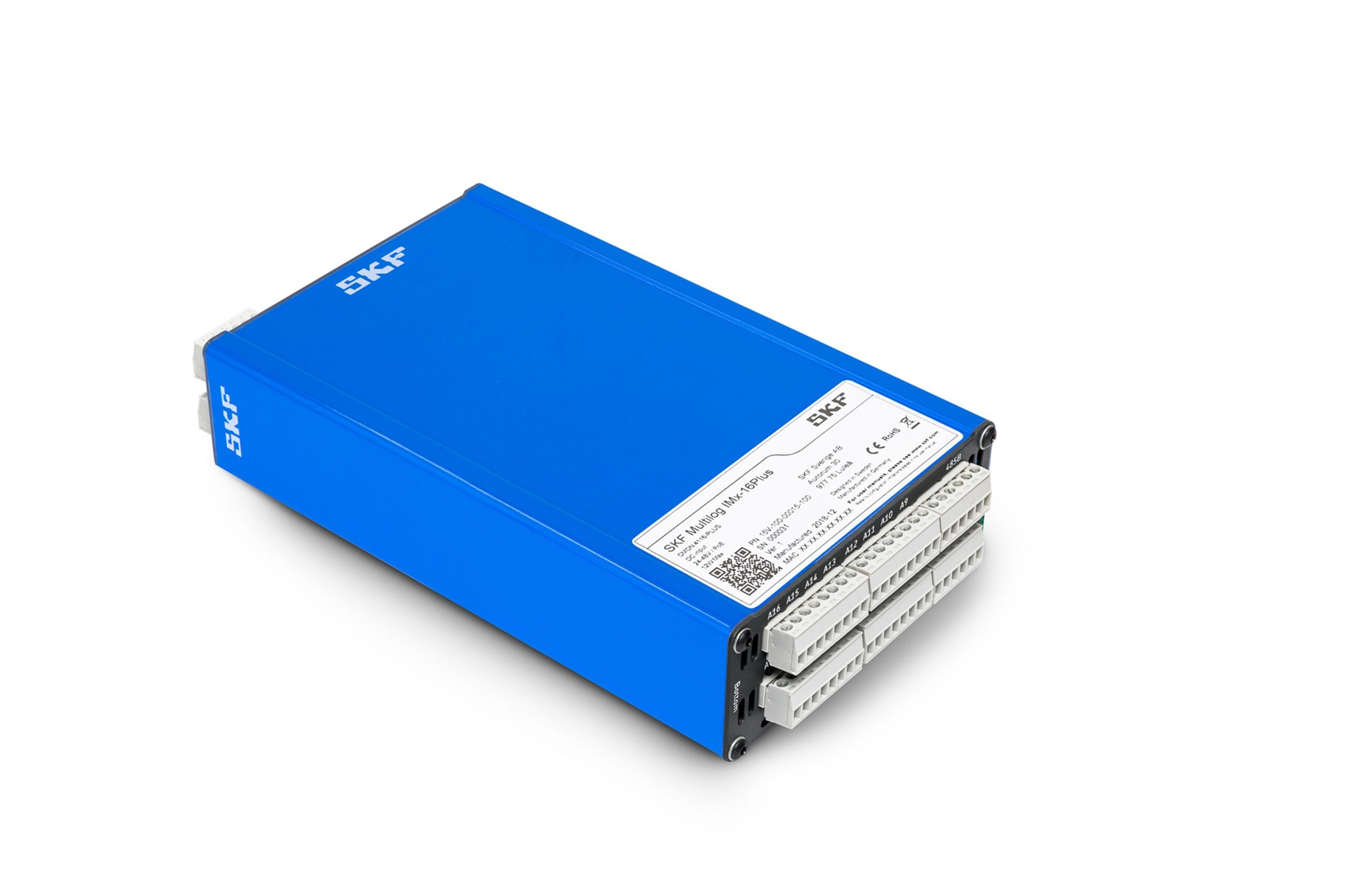
Installation commenced at the end of June 2026 in collaboration with Équipement Moderne and the customer’s IT team. Eight IMx-16 units were installed to monitor 13 geared motors via 52 vibration sensors, delivering continuous insight into machine condition and performance and enabling the early detection of emerging faults.
One of the COMO solution’s key value drivers is the shift from periodic inspections to continuous condition assessment. Automated alarms and real-time machine information enable abnormal operating conditions to be detected earlier, allowing maintenance activities to be planned proactively and reducing the risk of unplanned downtime. The investment extends beyond hardware to include vibration analysis expertise, the development of customer competencies and SKF’s @ptitude software platform, which provides permanent access to vibration and temperature data. While the customer can conduct its own first-level analysis, SKF remains available to provide advanced diagnostics, reporting and technical recommendations when required. “This combination of technology, expertise and knowledge sharing replaces reactive decision-making with actionable insight, empowering maintenance teams to make confident, data-driven decisions that improve reliability and asset performance,” emphasises Chebbi.
“Despite a complex installation environment, SKF successfully implemented a COMO solution that provides real-time asset intelligence, while further strengthening its local condition monitoring expertise and project execution experience,” says Chebbi. He also points to the system’s scalability which creates opportunities for future expansion, allowing additional critical assets to be incorporated through further measurement points and solutions such as IMx-16 and IMx-1.
Building on the customer’s established vibration analysis capabilities developed through previous training initiatives and hands-on experience, SKF will continue to support greater autonomy through ongoing knowledge transfer and advanced training in both offline and online condition monitoring technologies.
“Moving to online condition monitoring was a natural next step in the customer’s reliability journey,” explains Chebbi. “Our approach is built on three pillars: Customer autonomy, local distributor support and SKF expertise. The customer manages its local @ptitude platform and conducts its own first-level analysis. When deeper investigation is required, SKF provides advanced diagnostics, reporting and recommendations, while Équipement Moderne offers local support for sensors, IMx hardware and system-related requirements.”
Chebbi credits Équipement Moderne with playing an important role throughout the implementation process, noting that the team received specialised training on SKF’s condition monitoring and COMO solutions to provide effective local support. This collaborative model combines customer competence, distributor proximity and SKF’s technical expertise, creating a sustainable framework that supports long-term reliability improvement and continuous skills development.
This implementation showcases SKF’s ability to combine technical expertise, innovative technology and close collaboration to deliver sustainable operational value. Driven by distributor development, SKF’s food and beverage strategy, opportunity identification and ongoing technical support, the solution strengthened customer confidence while establishing a solid foundation for continuous improvement.
In closing, Chebbi says the initiative is about far more than installing 52 monitoring points. “Our approach was never simply to supply a condition monitoring system,” highlights Chebbi. “It’s about helping our customer build a stronger maintenance culture and a more proactive approach to asset management. Our objective was to help the customer improve machine reliability, availability, overall operational performance and safeguard production continuity by anticipating failures and optimising maintenance planning. We started with offline condition monitoring, developed competencies, transitioned to continuous online monitoring and established a platform that can evolve alongside the operation’s future needs. It demonstrates how SKF technology, local distributor support and customer commitment can work together to improve asset performance, enable informed maintenance decisions and safeguard production continuity.”
For more information please visit : www.skf.com