

Written by Kiran S. Pillai
Vastuta Think Tank
Zambia’s economic identity has been closely associated with copper mining. Copper
remains central to exports, foreign exchange earnings, government revenues and industrial
activity. Yet mineral wealth does not automatically produce broad-based industrialisation.
The greater economic opportunity lies in connecting mining with manufacturing: processing
minerals domestically, producing mining equipment, developing chemicals and industrial
inputs, expanding agricultural processing, and building new capabilities around batteries and
other mineral-intensive technologies.
Zambia therefore faces a strategic industrial question. Rather than viewing copper primarily
as an export commodity, the country can increasingly treat its mineral resources as the
foundation of an industrial ecosystem. This requires investment in electricity, transport,
technical skills, industrial finance, manufacturing technology and regional trade. Zambia’s
position in Southern Africa also creates opportunities to supply neighbouring markets.
This paper examines how Zambia could move from a predominantly resource-based
economy toward a more diversified manufacturing system while continuing to use mining as
an important source of capital, industrial demand and export revenue.
Keywords: Zambia, copper, manufacturing, mining, batteries, industrialisation, mineral
processing, agro-processing, Southern Africa, industrial policy
- Introduction
Natural resources can provide a country with substantial economic advantages, but
extraction alone does not guarantee structural transformation. The challenge for
resource-rich developing economies is to convert geological wealth into productive
capabilities that survive beyond individual commodity cycles.
Zambia illustrates this challenge particularly clearly. Copper has shaped the country’s
modern economy for decades. The mining industry creates exports, employment, demand
for services and government revenue, while copper production connects Zambia to global
industrial markets.
But much of the value generated by minerals can remain outside the country if raw or
minimally processed materials are exported while machinery, chemicals, components and
sophisticated industrial services are imported.
A different approach would treat mining as the beginning of an industrial value chain rather
than its endpoint. - Copper as an Industrial Foundation
Copper should not be regarded only as Zambia’s dominant export commodity. It is also an
industrial input with applications across electrical equipment, construction,
telecommunications, renewable energy systems, electric vehicles and power infrastructure.
This creates an opportunity for Zambia to develop progressively more domestic value
addition.
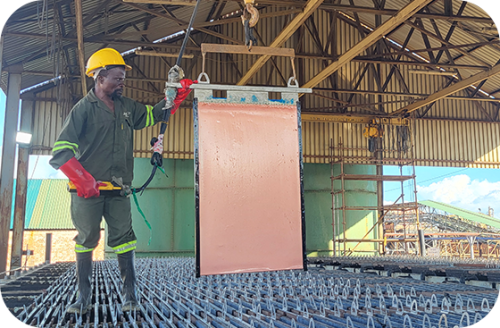
The first stage is efficient mineral processing. The next could involve production of copper
products and semi-finished materials. Over time, selected downstream activities could
include cables, electrical components and other copper-intensive products where Zambia
can achieve competitive scale.
The objective does not need to be complete domestic production of every copper-based
product. A more realistic strategy would identify activities where local production can
compete on cost, logistics, skills and access to regional markets. - Mining and Manufacturing Should Be
Connected
Mining companies represent a substantial domestic market for industrial products.
Mines require pumps, motors, electrical equipment, protective equipment, tyres, fabricated
metal structures, conveyor systems, drilling components, chemicals, maintenance services
and specialised machinery. Much of this demand can potentially support Zambian
manufacturers.
A mining-equipment strategy could therefore become one of the country’s most practical
routes into manufacturing.
Instead of importing every industrial component, Zambia could develop suppliers capable of
manufacturing, repairing and eventually exporting selected equipment.
This would create a feedback loop: mining generates demand for manufacturing,
manufacturing develops engineering capabilities, and those capabilities subsequently serve
other industries. - Mining Equipment as an Industrial Opportunity
Mining-equipment manufacturing does not necessarily require Zambia to immediately
produce sophisticated heavy machinery from scratch.
Industrial development can begin with maintenance and repair. Local firms can provide
machining, welding, fabrication, hydraulic services, electrical maintenance, component
refurbishment and equipment monitoring.
These activities can gradually develop into component manufacturing.
A Zambian engineering company that initially repairs mining equipment may eventually
manufacture replacement components. A fabrication workshop may progress toward
standardised industrial products. An electrical contractor may develop into a producer of
specialised electrical systems.
Such incremental industrialisation can be more practical than attempting to establish a
complete heavy-machinery industry immediately. - Copper and the Battery Economy
The global energy transition has increased interest in minerals used in batteries, electricity
networks and renewable-energy technologies.
Zambia’s copper resources give it a position within this emerging industrial landscape. But
mineral ownership alone does not guarantee participation in the battery economy.
The country would need to develop processing capabilities, reliable electricity, chemical
industries, logistics infrastructure and technical expertise.
The opportunity may extend beyond the manufacture of finished batteries. Battery materials,
copper products, electrical components, battery-related equipment, recycling and industrial
services can all form parts of a broader value chain.
Zambia can therefore examine where it has a realistic competitive advantage rather than
assuming that the country must immediately become a major producer of finished electric
vehicles or batteries. - Regional Battery and Mineral Value Chains
Zambia’s mineral economy does not exist in isolation. Southern Africa contains several
countries with complementary mineral resources, manufacturing capabilities and markets.
A regional value chain could connect Zambian copper with mineral processing, chemical
production, battery materials, electrical equipment and downstream manufacturing
elsewhere in the region.
This approach could reduce the limitations imposed by Zambia’s landlocked geography.
Instead of attempting to produce every component domestically, Zambia could specialise in
stages where its resources, electricity, labour and infrastructure provide an advantage.
Regional industrial cooperation could consequently become as important as domestic
industrial policy. - Agricultural Processing
Manufacturing diversification should not depend entirely on minerals.
Zambia has significant agricultural potential, creating opportunities for food processing and
rural industrialisation. Maize, soybeans, sugar, livestock, dairy, fruits and other agricultural
products can support processing industries.
Food processing can generate considerably more value than exporting unprocessed
agricultural commodities. Milling, oil extraction, animal feed, meat processing, dairy
products, fruit processing, packaging and cold-chain logistics can create industrial activity
across different regions.
Agro-processing also provides an important counterbalance to the concentration of industrial
activity around mining areas. - Fertilisers and Industrial Chemicals
Agriculture and mining can jointly create demand for a stronger chemical industry.
Mining operations require explosives, reagents, water-treatment chemicals, lubricants and
other industrial inputs. Agriculture requires fertilisers, crop-protection products and
soil-management inputs.
A domestic chemical sector could initially focus on products that have large and predictable
local demand.
Over time, chemical manufacturing can become a platform for more sophisticated industrial
activities. The objective would be to replace selected imports while creating products that
could eventually be exported into Southern African markets. - Manufacturing Machinery
Agricultural processing and mining both require machinery, providing another opportunity for
engineering development.
Zambia could encourage firms producing agricultural implements, pumps, conveyors,
storage equipment, processing machinery, irrigation equipment and basic industrial systems.
Machinery manufacturing has an important multiplier effect because it supports other
sectors.
A local food processor that purchases locally produced equipment creates demand for
engineering firms. Those engineering firms then purchase steel, electrical components and
services from other domestic businesses.
This creates an industrial network rather than an isolated factory. - The Importance of Electricity
Industrialisation cannot proceed without reliable and affordable electricity.
For Zambia, this is particularly important because mining is itself a major electricity
consumer. Manufacturing would add further demand.
The country’s electricity system therefore needs to be viewed as industrial infrastructure
rather than simply a utility service.
Expanding generation, strengthening transmission networks, improving distribution reliability
and developing appropriate renewable-energy capacity can provide the foundation for
manufacturing investment.
Reliable electricity can also improve the economics of mineral processing and
energy-intensive industries. - Infrastructure and the Landlocked Economy
Zambia’s geography presents both a constraint and an opportunity.
As a landlocked country, Zambia depends on transport corridors connecting it to ports and
neighbouring economies. Railways, roads, border infrastructure, warehouses and customs
systems consequently influence the competitiveness of virtually every manufacturing
industry.
Industrial policy should therefore be integrated with corridor development.
A manufacturer in Zambia is not competing only on factory costs. The company is also
competing on the time and cost required to import machinery, receive components and move
finished goods to customers.
Improving logistics can therefore function as a form of industrial policy. - The Copperbelt as an Industrial Cluster
The Copperbelt provides a natural starting point for mineral-linked manufacturing.
The region already possesses mining companies, engineering firms, technical workers,
transport networks and industrial demand. These characteristics can support a cluster-based
development strategy.
Rather than creating manufacturing centres without an existing industrial base, Zambia can
strengthen the ecosystem around mining regions.
The Copperbelt could gradually host more equipment manufacturers, repair businesses,
metal-processing companies, electrical suppliers, laboratories, training institutions and
technology firms.
Mining would then become an anchor industry for a broader manufacturing cluster. - Skills and Technical Workforce
Industrial transformation requires a workforce capable of operating increasingly
sophisticated production systems.
Zambia needs machinists, welders, electricians, mechanics, instrumentation technicians,
industrial engineers, chemical technicians, process operators and maintenance specialists.
The country’s technical and vocational education system can be connected more directly to
mining and manufacturing companies.
Training should increasingly combine mechanical skills with digital technologies. Modern
mines and factories use sensors, automation, computer-controlled equipment, industrial
networks and predictive-maintenance systems.
A technician capable of understanding both machinery and digital monitoring can become
considerably more valuable to an industrial employer. - Automation and Productivity
Manufacturing diversification should not be based on low wages alone.
Zambia will have to compete with countries that possess much larger manufacturing
workforces. Productivity therefore becomes essential.
Automation can help local companies increase output, improve quality and reduce
downtime. Sensors can monitor equipment, computerised systems can improve production
control, and data analytics can identify maintenance requirements.
The goal should not be automation for its own sake. Technology should be deployed where it
increases productivity and allows Zambian firms to meet international quality and reliability
standards. - Industrial Finance
Manufacturing requires patient capital.
A factory may need several years to reach efficient production volumes, develop customers
and establish export relationships. Small engineering companies also require working capital
to purchase machinery and fulfil industrial contracts.
Financial institutions and development-finance mechanisms can therefore play an important
role in industrialisation.
Financing should increasingly support productive investment in machinery, equipment,
testing facilities, warehouses, processing plants and technology rather than only short-term
commercial activity. - Building Domestic Supplier Networks
A resource economy can generate large industrial demand without necessarily generating a
large domestic supplier base.
This is an important gap that Zambia can address.
Mining companies, construction firms, agricultural processors, utilities and manufacturers
can create supplier-development programmes that help smaller firms meet technical
standards and quality requirements.
Once a supplier becomes capable of meeting the standards of a major mining company, it
may also be able to sell to companies in other countries.
Supplier development can consequently turn domestic industrial demand into an export
capability. - From Import Replacement to Export
Manufacturing
Import substitution can be useful at the beginning of industrial development, but a
manufacturing economy eventually needs external markets.
Zambia’s domestic market alone may not be large enough to support highly specialised
production.
The Southern African market provides a larger opportunity.
Manufacturers can potentially serve neighbouring countries with processed foods,
agricultural machinery, construction materials, mining equipment, chemicals, electrical
products and industrial components.
Regional trade therefore provides the scale required for industrial diversification. - Mining Revenue and Industrial Investment
Copper revenues can provide capital for industrial development, but resource income must
be converted into productive capacity.
Investment in roads, power systems, technical education, industrial parks, laboratories,
research institutions and logistics can increase the economy’s long-term productive potential.
The objective should be to create capabilities that continue generating value even when
commodity prices fluctuate.
This is the deeper meaning of economic diversification. - Green Manufacturing
Environmental considerations will increasingly affect international manufacturing and mineral
markets.
Zambia can use its relatively renewable electricity potential and mineral resources to
develop lower-carbon industrial production where economically viable.
Cleaner mineral processing, energy-efficient factories, renewable-powered industrial
facilities, recycling and responsible mining practices could become competitive advantages.
International buyers are increasingly interested not only in what a country produces but also
in how those products are produced. - A New Industrial Strategy
A practical Zambian industrial strategy could be built around several connected priorities.
Copper processing should be expanded where economically viable. Mining equipment and
industrial maintenance should become stronger domestic industries. Agricultural processing
should connect rural production with manufacturing. Chemical production should serve
mining and agriculture. Engineering firms should develop machinery and components.
Battery-related value chains should be explored selectively. Logistics corridors should be
strengthened, while technical education should supply the workforce required by these
industries.
The central principle should be integration.
Mining policy, manufacturing policy, energy policy, agriculture policy and infrastructure policy
should not operate as separate programmes. They are parts of the same industrial system. - Conclusion
Zambia’s copper resources are not merely an economic dependency. They can also be an
industrial starting point.
The country already possesses mining expertise, industrial demand, engineering
capabilities, agricultural resources and a strategic position within Southern Africa. The
challenge is to connect these assets.
Copper can support metal processing. Mining can create demand for equipment
manufacturers. Agriculture can support food-processing industries. Both mining and
agriculture can create markets for chemicals and machinery. Technical education can
provide the workforce connecting these sectors.
The transition from resource extraction to industrialisation does not require Zambia to
abandon copper. It requires the country to capture more of the economic activity surrounding
copper and connect it to other productive sectors.
If Zambia can build domestic capabilities in processing, engineering, mining equipment,
chemicals, agro-processing and selected battery-related industries, its mineral wealth can
become the foundation of a broader manufacturing economy.
The ultimate objective is not simply to export more copper. It is to build an economy capable
of turning copper, agricultural resources, human skills and infrastructure into increasingly
sophisticated products and services for Zambia and the wider African market.