

The mining industry now generates close to a sixth of everything Namibia produces. It employs roughly one worker in seventy.
The difference between those two numbers is where the country’s next decade will either be won or lost.
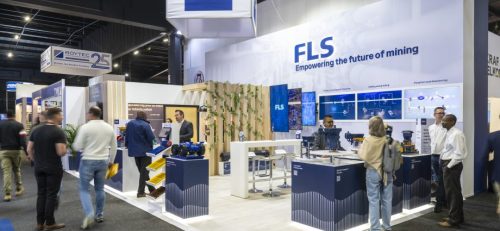
The concluded 2026 Namibia Mining Expo and Conference which took place from 4 – 6 August, marked its 13th edition this year. This year’s theme was “Mining for Namibia’s Future, Job Creation, Local Empowerment and Economic Transformation”.
The theme challenges us on how to step up in balancing desirable future inclusive growth ambitions, aligned with Namibia’s industrialisation agenda.
Namibia is a mineral paradise, endowed with world-class mineral deposits that have positioned the country among Africa’s leading mining jurisdictions. However, if you are given manna without working up a sweat to get it, you are liable to misuse it.
At the onset, our attention has been on hold on so many fronts. Firstly, years have passed since the National Equitable Economic Empowerment Bill – first tabled in 2015, which is intended to impose Namibian ownership and local content requirements sector by sector – has sat unpromulgated.
Secondly, the Namibian Investment Promotion and Facilitation Bill, meant to substitute the 1990 Foreign Investment Act, is still under public scrutiny and consultation.
In their absence, that means local ownership on mining and energy licences is being decided the old way: case by case, minister by minister, and regulator by regulator, ranging anywhere from 5% to 30% based on who is granting the licence and when. Then, that just makes it a policy that has teeth but does not have the power to bite.
The mining and quarrying contributed 14% of GDP in 2025, yet the sector employed just 1.4% of the population. Namibia’s Gini coefficient is hovering around 64.2, the second-highest level of inequality recorded anywhere on earth, behind only South Africa.
The sector with the largest producer and exporter of uranium concentrates puts back the least in jobs and value addition in a country that is already among the most unequal on the planet. Bridging that gap is precisely what local content policies exist to furnish.
Since the pressing on the local content is too high on every policy discussion, one needs to understand the scale and the dimension of such.
A broad scope of IGF surveys done on 31 countries found that for local content to have an impact, it should be associated with the sector in strengthening linkage and generating value within the domestic economy through three levers: geography (through the communities’ benefit and the whole nation), value-added (on how much processing can happen on Namibian soil), and ownership (who actually holds the equity?).
Tailor-Made
History offers Namibia both warnings and blueprints. Our neighbour Botswana turned a diamond-cutting requirement into a genuine domestic polishing industry. Ghana demanded mining companies help local suppliers meet international standards, and local procurement rose due to that clarion call of compliance.
The People’s Republic of China holds 8% of the world’s copper mine output and builds roughly a million jobs in copper processing simply by insisting on midstream and downstream investment at home.
Indonesia did the same with nickel and is now among the world’s leading refined producers.
However, in the pursuit of such policies, shortcomings in regulation that may outrun what local suppliers and workers can actually deliver may raise costs and dent competitiveness, which, if not managed well, can end up lowering the very fiscal revenue they were choreographed to protect.
Three things would move the needle of transformation in overhauling variables that matter to us: GDP growth, employment and the inequality gap. Firstly, expedite passing the outstanding legislation – as a decade of “currently being under scrutiny” has cost the country a decade of predictability that investors price into every bid.
Secondly, replace the ad hoc 5 – 30% ownership range with rules of origin and phased, sector-specific targets set in law, left to a minister’s discretion, so both investors and Namibian suppliers know what they are building toward.
Lastly, build the canon to actually measure compliance; data tools such as the Local Procurement Reporting Mechanism (LPRM) and Local Investment Opportunities in Natural Resources (LION) systems remain barely used across the region, despite the fact that they are rated highly effective by the few countries that have attempted them.
For example, Kazakhstan uses standard reporting templates to improve their transparency and enhance comparability of information across operators.
Local content should not be created for policy content’s sake on paper to please international standards only nor as a bare minimum compliance exercise.
It should be a vehicle for value creation that build a balance in localising component structure that commensurate and aligned with Namibian sector-specific industrial policy objectives while leaving room for investors’ incentives to survive, thrive and grow.
In that approach, the outcome of our mining activities would foster domestic capabilities beyond extraction and, in tandem, reduce investor uncertainty by addressing concerns related to production contracts and fiscal stabilisation and rebalancing clauses.