

When Zambia’s President Hakainde Hichilema launched his re-election campaign with a visit to Chingola, the heart of the country’s copper-mining industry, the event was intended to highlight the economic gains achieved under his administration.
Instead, the visit exposed growing frustration among communities that believe they have yet to benefit from Zambia’s mineral wealth.
As Hichilema addressed supporters last November, demonstrators began chanting “Senseli”, the name of a nearby mine where small-scale miners have been campaigning for access to areas believed to contain significant copper deposits. Tensions quickly escalated, with stones thrown towards the podium and the presidential holding tent set alight. Security officials eventually moved Hichilema to safety.
The incident highlighted a central question confronting Zambia as the country heads to the polls: have ordinary Zambians benefited from the country’s copper boom?
Zambia, Africa’s second-largest copper producer, is experiencing strong economic growth, supported by higher copper prices, increased mining investment and progress on debt restructuring. The International Monetary Fund projects economic growth of 4.3 per cent this year, while official statistics show annual inflation has fallen to 6.5 per cent.
Yet the economic recovery has not been equally visible across the country.
More than 70 per cent of Zambia’s 22mn people live on less than $3 a day, according to widely cited estimates, leaving many households struggling with the cost of living despite improvements in headline economic indicators.
Hichilema’s strongest challenger, Brian Mundubile, a lawyer and former member of parliament with a strong political base in the Copperbelt, has made economic hardship and governance central themes of his campaign. He has also criticised the government over its human rights record.
Mundubile, who was briefly detained earlier this year, has seen supporters tear-gassed during recent political activities. Earlier this year, he warned that Zambia’s democracy was facing a serious threat.
Hichilema came to power in August 2021 after 15 years as an opposition politician, just nine months after Zambia defaulted on its sovereign debt. He promised to rebuild the economy, restore investor confidence and ensure that economic growth translated into better living standards.
His administration has won praise from international investors and financial markets for restructuring Zambia’s debt and attracting investment into the mining industry at a time when copper prices have reached record levels.
But the benefits remain contested.
“Sixty-something years after independence, many Zambians are not happy with the way politicians are managing the mining industry,” said Trevor Simumba, an economist and analyst based in Lusaka. “We can’t have all this resource and wealth and we are not seeing the benefits — it doesn’t make sense.”
Pressure to Deliver More From Copper
The political pressure has forced the government to pay greater attention to communities seeking a larger role in the mining economy.
During a recent visit to Chingola, Hichilema directed that two slag dumps containing potentially recoverable residual copper be opened to local young people for small-scale mining. The government has also proposed providing equipment and training to help them operate safely.
For communities in the Copperbelt, such measures could represent an important shift towards greater local participation in the mining industry.
Simumba believes Hichilema could still secure a second term, but argues that the political message from mining communities will be difficult to ignore.
“He may just be able to squeeze a second term,” Simumba said, adding that the president may need to reconsider how his government approaches foreign direct investment and the mining sector, including the possibility of revisiting some mining agreements.
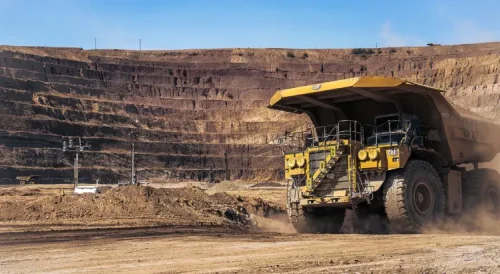
Since taking office, Hichilema has positioned Zambia as a more business-friendly investment destination. His administration says approximately $10bn has been committed to the mining sector since 2021.
The president has set an ambitious target of doubling copper production to 3mn tonnes a year by 2031. His government also wants to restore Zambia’s full access to international capital markets following the country’s debt restructuring.
“We will double the size of the Zambian economy, permanently end load-shedding, and create millions of new jobs,” Hichilema said in a May election address.
Growth Versus Everyday Reality
Supporters of the government argue that economic transformation takes time.
Lubinda Haabazoka, director of the University of Zambia’s Graduate School of Business, said the administration deliberately prioritised macroeconomic stability and debt restructuring instead of pursuing short-term populist measures.
“The economy knows no quick fixes,” Haabazoka said. He argued that the government’s strategy was to repair the foundations of the economy first, while betting that stronger growth and greater stability would eventually translate into improved living conditions.
For many Zambians, however, that promised improvement has yet to arrive.
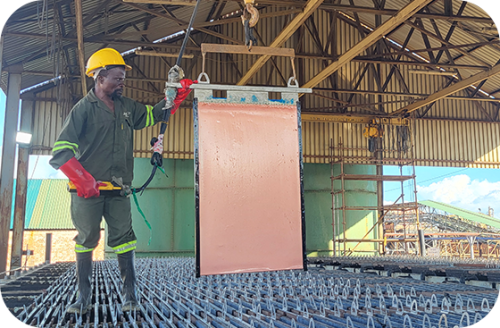
“The copper is going out, but what are we getting from it?” asked Branham Chitalu, a worker at a Chinese-owned copper mine in Kitwe.
That question captures the growing debate over Zambia’s mining model: whether increased production and foreign investment can deliver broad-based economic benefits or primarily strengthen government revenues, mining companies and financial markets.
Emmanuel Mwamba, a former diplomat and senior official in the previous ruling party who is now in exile, has accused well-connected mining companies of benefiting disproportionately from Zambia’s mineral wealth.
“These multinationals have gotten benefits,” he said, arguing that government policies had been structured in ways that favoured large mining companies.
Mundubile has sought to capitalise on this sentiment, promising to ensure that Zambia captures more value from its mineral resources and that mining wealth benefits local communities.
For investors, however, any major policy shift carries risks.
A senior executive at a large copper mining company in the Copperbelt warned that Zambia could not easily afford to abandon the fiscal discipline and debt restructuring that helped restore its credibility with international capital markets.
“For investors, the priority is continuity and clarity,” the executive said.
A Growing Political Challenge
The discontent over economic conditions is also reflected in the growing number of independent candidates contesting the election.
Fourteen presidential candidates and around 360 independent candidates are competing for parliamentary seats, signalling the extent to which dissatisfaction with the ruling United Party for National Development has created space for alternative political voices.
Under Hichilema, constitutional changes have also expanded the size of parliament, despite objections from the Constitutional Court and civil society organisations.
Reliable recent opinion polling remains limited, making the final outcome difficult to predict. However, analysts expect Hichilema’s UPND to potentially fall short of a parliamentary majority.
Such an outcome could significantly constrain the president’s ability to pursue his economic programme during a second term.
The Long-Running Mining Question
For older generations of Zambian mining workers, the current debate is part of a much longer story.
Mulenga Pascal Bwalya, who spent 38 years working at Konkola Copper Mines, has witnessed Zambia’s mining industry move through successive periods of private and state ownership.
Yet he says the country’s enormous mineral wealth has never translated into sufficient prosperity for ordinary mining communities.
“We have a problem of political negligence,” Bwalya said.
His comments reflect a sentiment shared across much of the Copperbelt: Zambia has copper, investment and growing production, but the challenge is ensuring that the wealth generated underground creates visible opportunities above ground.
For Hichilema, the next phase of Zambia’s mining boom will therefore be about more than increasing production.
It will be about convincing millions of citizens that the copper beneath their soil is finally improving their lives.
As copper prices remain elevated and global demand for the metal grows, that expectation is likely to become an increasingly powerful political force — and a defining test of Zambia’s economic transformation.